Skip to content

Pickup guaranteed after 5 PM ET for orders placed by 4 PM

Order by 4 PM ET for Same-Day Production & Shipping

Free Standard Shipping $100+ · Free 2-Day Shipping $200+

Cart

No heat press required

Custom UV DTF Transfers for Hard Surfaces

Apply full-color, opaque graphics to smooth glass, acrylic, coated metal, hard plastic, cups, tumblers, and other compatible hard goods. Build a gang sheet, upload a finished layout, or order individual pre-cut decals.

Custom UV DTF transfers for tumblers and hard surfaces
Same-day productionOrder by 4 PM ET for same-day production and shipping.
Local pickupOn-time pickup guaranteed after 5 PM ET.
Free standard shippingIncluded on orders over $100.
Free two-day shippingIncluded at $200 or more.

Choose your ordering path

Build, upload, or order each UV DTF decal pre-cut

Every path produces the same category of transfer. Choose based on how your artwork is prepared and whether trimming a gang sheet fits your workflow. Prices and availability below come directly from Shopify.

Most flexible

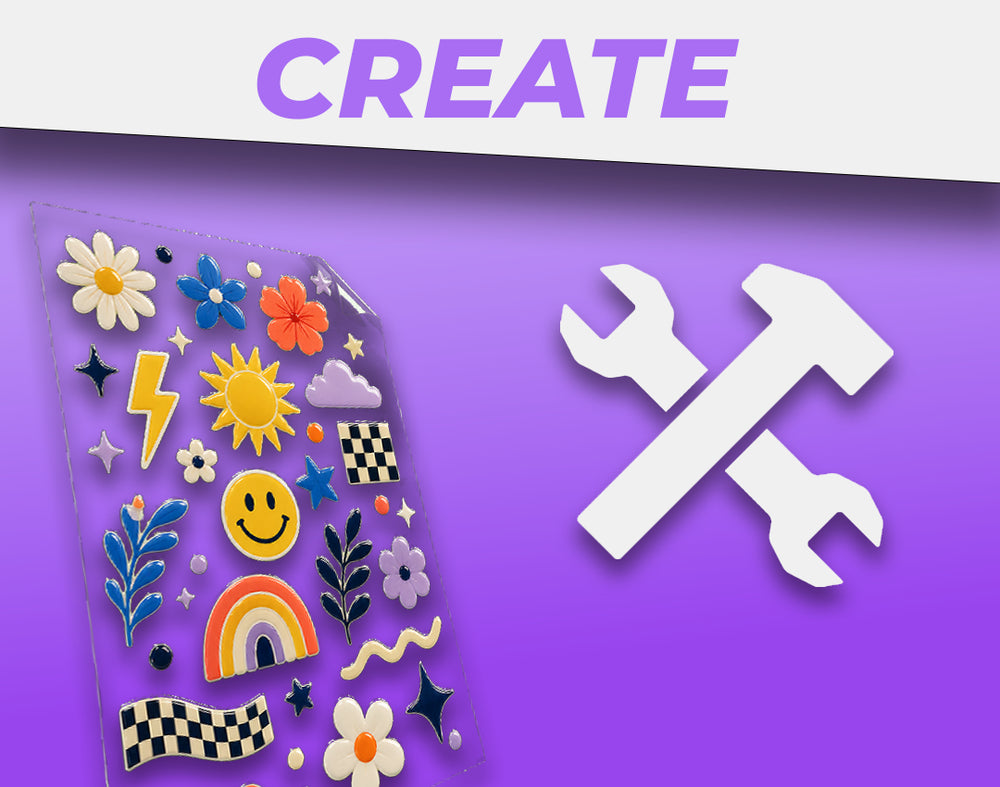
Build Your UV DTF Gang Sheet

Upload, size, duplicate, and arrange multiple decals online. Fill the sheet with different names, logos, or graphics to make efficient use of the printable area.

Best for: mixed decal sets, personalization, and maximizing sheet value

From $15.78Start the builderAvailable to order
Print-ready workflow

Upload a Finished Gang Sheet

Send one complete layout at the ordered dimensions. This path is fastest when your team already prepares production sheets and has checked spacing, size, and transparency.

Best for: designers and repeat production layouts

From $16.56Upload your sheetAvailable to order
No trimming

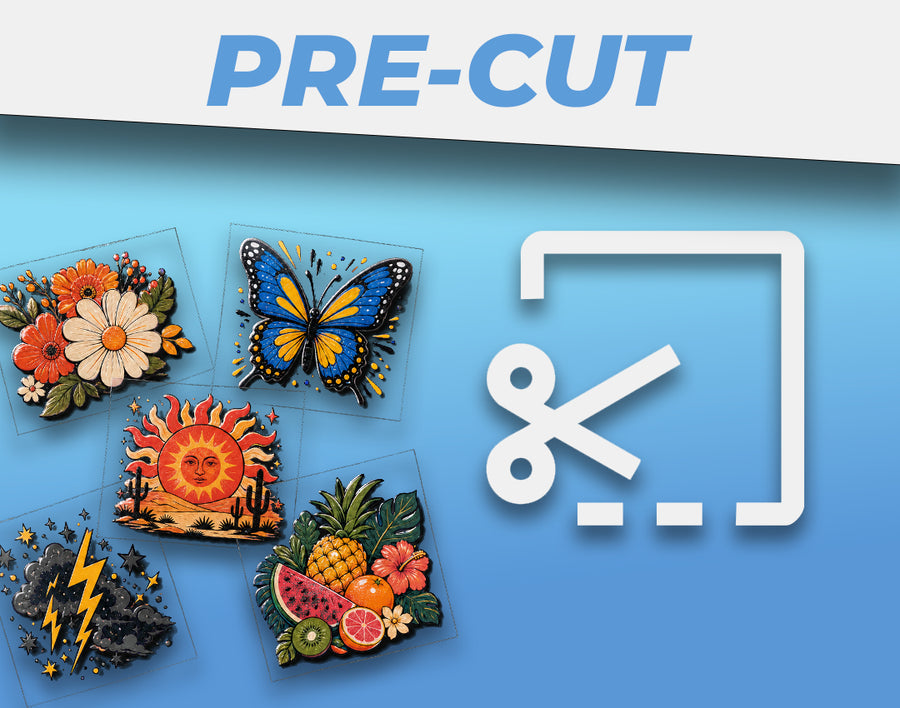
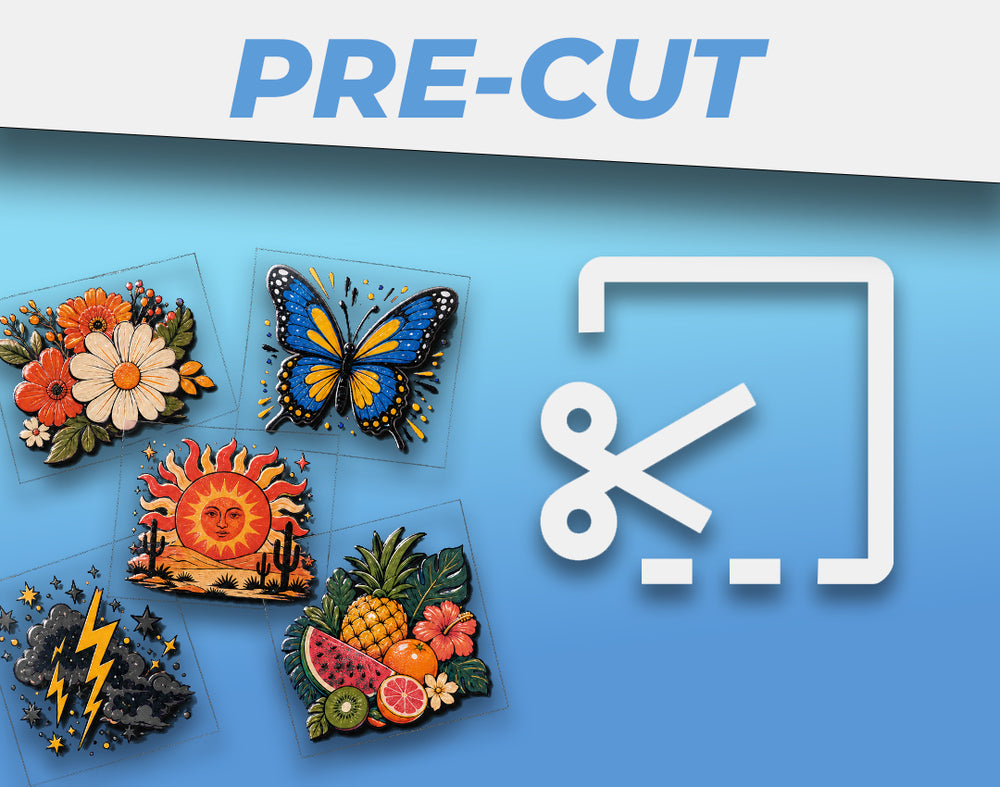
Order Pre-Cut UV DTF

Receive each decal separately so application can begin without trimming a larger sheet. This is the simplest way to distribute repeat logos across a production team.

Best for: repeat designs, simple handling, and ready-to-apply orders

From $10.00Shop pre-cut UV DTFAvailable to order

UV DTF fundamentals

What are UV DTF transfers?

UV DTF transfers are pressure-applied graphics for compatible hard surfaces. They deliver full color, fine detail, gloss, and an opaque white layer without cutting and weeding separate vinyl colors.

The transfer arrives between films. After surface preparation, the adhesive graphic is positioned, pressed down, burnished, and released from the carrier. Because there is no heat press, UV DTF can simplify decoration of many shaped products—but surface testing is still essential.

Adhesion depends on surface energy, cleanliness, texture, coating chemistry, curvature, and how the finished object is used. A decal that holds well to smooth glass may not behave the same way on powder coat or raw wood. Test the actual blank, not merely another item that looks similar.

What UV DTF is

UV DTF prints color, white, and protective layers onto a transfer film. Pressure moves the finished graphic from the carrier to a compatible hard surface, creating a dimensional decal without heat pressing.

Who it fits best

Use it for branded drinkware, promotional goods, small-batch personalization, product labels, gift makers, event merchandise, and hard goods that cannot go into a sublimation press.

Important limitations

UV DTF is not a universal sticker. It performs best on smooth nonporous surfaces. Texture, coatings, tight curves, flexing, heat, dishwashers, and prolonged water exposure can reduce adhesion or life.

Surface compatibility

Start with a smooth, clean, nonporous surface

Surface quality matters more than the object’s name. Two tumblers can have different coatings, and two plastics can have very different adhesive performance.

Before a full run, apply a representative decal to the exact item, allow it to rest, then evaluate edges, fine details, hand feel, and care conditions. Do not apply over dust, oils, condensation, cleaner residue, or loose coatings. UV DTF is decorative and should not cover areas intended for direct food contact.

Surface or itemFitWhat to know
Smooth glass and acrylicRecommendedClean thoroughly and keep graphics away from direct food-contact areas.
Stainless steel and coated metalRecommended with testingFinish chemistry varies; test powder-coated and painted surfaces.
Rigid hard plasticRecommended with testingSome low-energy plastics resist adhesive; test the exact blank.
Tumblers and cupsRecommended on suitable areasPlan for curvature and avoid rims, threads, and direct food contact.
Sealed wood or lightly textured coatingTest firstTexture can leave gaps under fine details and edges.
Fabric, paper, raw porous wood, siliconeNot recommendedPorosity, fibers, or low surface energy prevent reliable transfer.

Size and placement

Plan for the surface, curvature, and user’s grip

A flat digital measurement does not show how a decal will look when wrapped around a cup or placed near a handle. Mock up the design at actual size on the real blank before ordering volume.

Keep important type and logos on the most visible, least curved area. Avoid placing fine edges where fingers repeatedly rub, where lids slide, or where the object contacts a holder. On drinkware, preserve a comfortable clear zone near the rim and follow the blank maker’s safety guidance.

Gang-sheet economics improve when the sheet is filled efficiently, but usability matters more than squeezing in one extra piece. Leave workable cut lines, keep components of a multi-part design together, and order a sample when a new surface or unusual shape is involved.

Measure the usable area

Measure between rims, handles, seams, tapers, and other interruptions. For curved items, use the practical wrap area rather than the object’s full circumference.

Respect curves and tapers

Small decals conform more easily than wide rigid graphics. Strong compound curves and tapered walls can force the film to wrinkle or the design to distort. Test placement with paper first.

Plan gang sheets for cutting

Leave enough room to trim around every graphic without nicking nearby art. Group repeat sizes, label sets clearly, and confirm that tiny isolated details are large enough to transfer cleanly.

A quick visual break

See the finish and application before you order

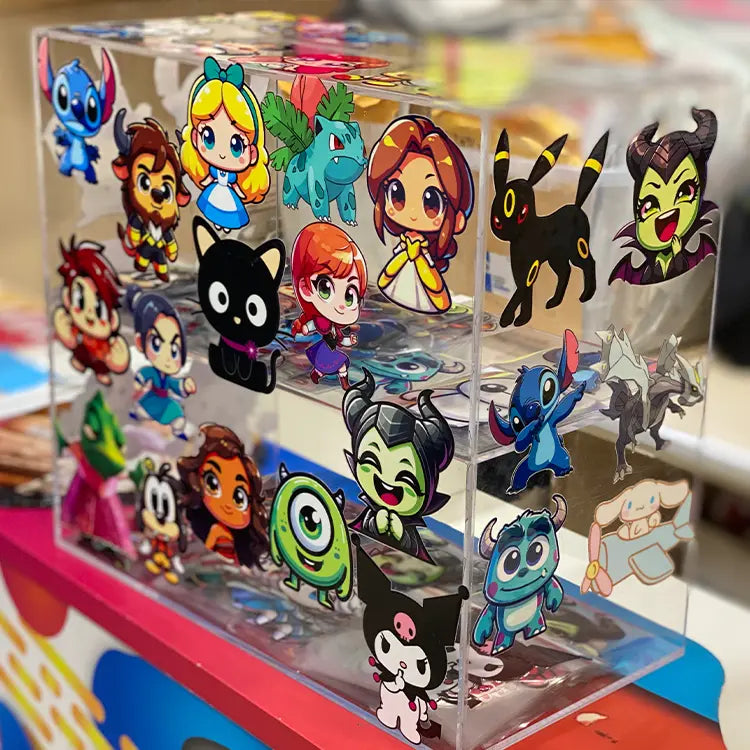
UV DTF transfers are by far the easiest to use. No heat or time required, just stick, burnish, and peel. Perfect for quick production runs, custom orders, and projects where speed matters. Works on virtually any smooth surface—from drinkware and phone cases to apparel and hard goods. Get professional results in seconds without specialized equipment or lengthy setup times.

UV DTF gang sheet with full-color hard-surface decals

See a UV DTF sticker up close

UV DTF transfers deliver vibrant, glossy finishes ideal for flat surfaces like tumblers, phone cases, and rigid substrates. Our transfers use advanced UV-curable inks that bond directly to materials without requiring a carrier film, creating durable, waterproof designs that resist fading and scratching. Perfect for custom orders and high-volume production.

Watch how easy UV DTF stickers are to use.

Discover the simplicity of UV DTF transfers. Peel, apply, burnish, and reveal—it's that effortless.

Artwork preparation

Build artwork for a physical adhesive graphic

The printed decal reproduces the file you supply, including unwanted backgrounds and soft edges. Review the design on both light and dark mockups because the white layer changes how color appears.

Upload in normal reading orientation unless the live product instructions say otherwise. Confirm spelling, names, dates, and quantities before checkout. For upload-ready gang sheets, the file canvas must match the ordered dimensions and every decal must remain inside it.

Avoid unnecessary large solid rectangles when the design can follow the contours of the logo. Contoured artwork often looks more integrated with the product and is easier to place on gentle curves. When exact brand color is critical, order and approve a sample on the actual blank because screens, inks, gloss, and surface color all influence perception.

Use transparent, high-resolution art

Prepare a clean PNG at final size, preferably 300 DPI. Remove unwanted backgrounds, stray pixels, and compression artifacts. Do not enlarge a small screenshot and expect sharp print detail.

Check fine details

Inspect tiny text, hairlines, detached dots, distressing, and semi-transparent shadows at actual size. Extremely small isolated elements may be hard to burnish and release reliably.

Design for an opaque decal

UV DTF can include white and many colors. Transparent areas reveal the object below; printed areas have physical thickness and gloss. Design intentionally for that contrast.

Good versus risky

A reliable UV DTF result starts before the peel

Use this side-by-side guide to help new customers identify a strong surface and avoid the most common application problems.

Clean edges · Smooth surface · Tested blank
Strong result

Good setup: clean art on a smooth surface

Artwork has clean contours and readable details. The blank is smooth, nonporous, residue-free, and tested before the full run.

Surface residue · Heavy texture · Details too small
Risk of failure

Problem setup: tiny details on texture or residue

Fine isolated elements, rough coatings, oils, cleaner residue, or tight curves can create lifting edges and incomplete transfer. Test or revise before production.

Application and care

A careful application protects edges and fine detail

UV DTF is pressure applied. Surface preparation, alignment, firm burnishing, and a controlled peel are the core of a reliable result.

Allow the applied graphic to rest before heavy handling or washing. Care for decorated drinkware gently: hand wash with a soft sponge, avoid abrasive cleaners, do not soak, and keep it out of dishwashers and microwave ovens unless the blank and transfer instructions explicitly approve otherwise. UV DTF durability depends on use, surface, and care, so this guide does not promise an unsupported wash count.

Removal is surface dependent. Gentle heat and slow peeling may help on some items, followed by a surface-safe adhesive remover. Test first: aggressive scraping, solvents, or heat can damage coatings and plastic. A removed UV DTF decal is not designed for reuse.

Clean without residue

Remove oils and dust with a surface-appropriate cleaner. Let the object dry completely and avoid touching the prepared application area with your fingers.

Burnish from the center

Position carefully, anchor the transfer, then press outward. Apply extra attention to fine lines and edges. On a curve, work slowly in small sections to reduce trapped air and wrinkles.

Peel low and slow

Pull the carrier back at a low angle while watching the graphic. If a detail lifts, lay the film back down, burnish again, and continue only after it has transferred.

Pricing and turnaround

Choose value by sheet use and handling time

Live starting prices appear in the ordering cards. The final price depends on product, dimensions, quantity, and options; no sale amount is hard-coded into this page.

A filled gang sheet often lowers effective cost per decal. Pre-cut transfers can save trimming, sorting, and distribution time. Upload-ready sheets are efficient when layout work is already complete. Compare the entire production job, including setup, surface testing, spoilage, and operator time.

Same-day service applies to complete, production-ready orders received by the cutoff. Artwork questions or revisions can change the schedule. Carrier transit follows production and the shipping service selected at checkout.

Order by 4 PM ETProduction-ready orders qualify for same-day production and shipping.
Produced the same dayArtwork moves through the chosen gang-sheet or pre-cut workflow.
Pickup after 5 PM ETOn-time local pickup is guaranteed for qualifying orders.
Shipping valueFree standard shipping over $100; free two-day shipping at $200 or more.

Compare your options

UV DTF vs adhesive vinyl and sublimation

Choose by blank compatibility, artwork, labor, finish, and care expectations. Test any unfamiliar surface before committing the full order.

Decision factorUV DTFAdhesive vinylSublimation
ApplicationPressure-applied finished graphicCut, weed, mask, and applyHeat and pressure into a coated blank
Full-color detailStrong, including white and gradientsPossible with print-and-cut; layered vinyl is limitedStrong but no white ink
Best surfacesSmooth compatible hard surfacesMany smooth hard surfaces with correct vinylSublimation-coated hard blanks
Heat press neededNoNo for pressure-sensitive vinylYes
Production laborNo color-by-color weedingWeeding and masking can be significantPrint, tape, and press each blank
Choose it whenYou need quick full-color hard-surface decorationYou need specialty vinyl properties or simple cut graphicsYou have compatible blanks and want dye beneath the coating

UV DTF is for hard surfaces, not apparel. For shirts, hoodies, and fabric goods, compare the DTF and sublimation transfer hubs.

Real product formats

See the UV DTF ordering options

Images come from the live products and approved campaign reviews are reused without creating new testimonials or unsupported performance claims.

UV DTF questions, answered

Frequently asked questions about UV DTF transfers

Use the live product directions as the final authority for current file and application requirements.

What surfaces work best for UV DTF?

Smooth, clean, nonporous glass, acrylic, coated metal, and compatible hard plastic are the strongest candidates. Test the exact blank before a full run.

Can I put UV DTF on a tumbler?

Yes, on a compatible smooth finish. Keep decoration away from the rim and direct food-contact areas, plan for curvature, and follow gentle hand-wash care.

Is UV DTF dishwasher safe?

Hand washing is recommended. Dishwashers, soaking, abrasive cleaning, and high heat can shorten the life of the decoration.

Does UV DTF need a heat press?

No. It is applied with pressure through cleaning, positioning, burnishing, and controlled carrier removal.

Will it work on textured or powder-coated items?

Sometimes, but these are test-first surfaces. Texture and coating chemistry can reduce contact under edges and fine details.

Can UV DTF go on fabric?

No. Choose apparel DTF for cotton, polyester, blends, and garments.

What artwork should I upload?

Use clean, transparent, high-resolution art at final print size. A 300 DPI PNG is the safest choice for most orders.

Can I mix designs on one UV DTF gang sheet?

Yes. Mix designs, sizes, and quantities while keeping everything inside the ordered canvas with enough room to trim.

Can a UV DTF decal be removed and reused?

Removal may be possible with surface-appropriate methods, but the decal is not designed to be reused. Test heat and adhesive removers to avoid damaging the blank.

Do you offer same-day production?

Production-ready orders placed by 4 PM ET qualify for same-day production and shipping, with on-time local pickup guaranteed after 5 PM ET.