
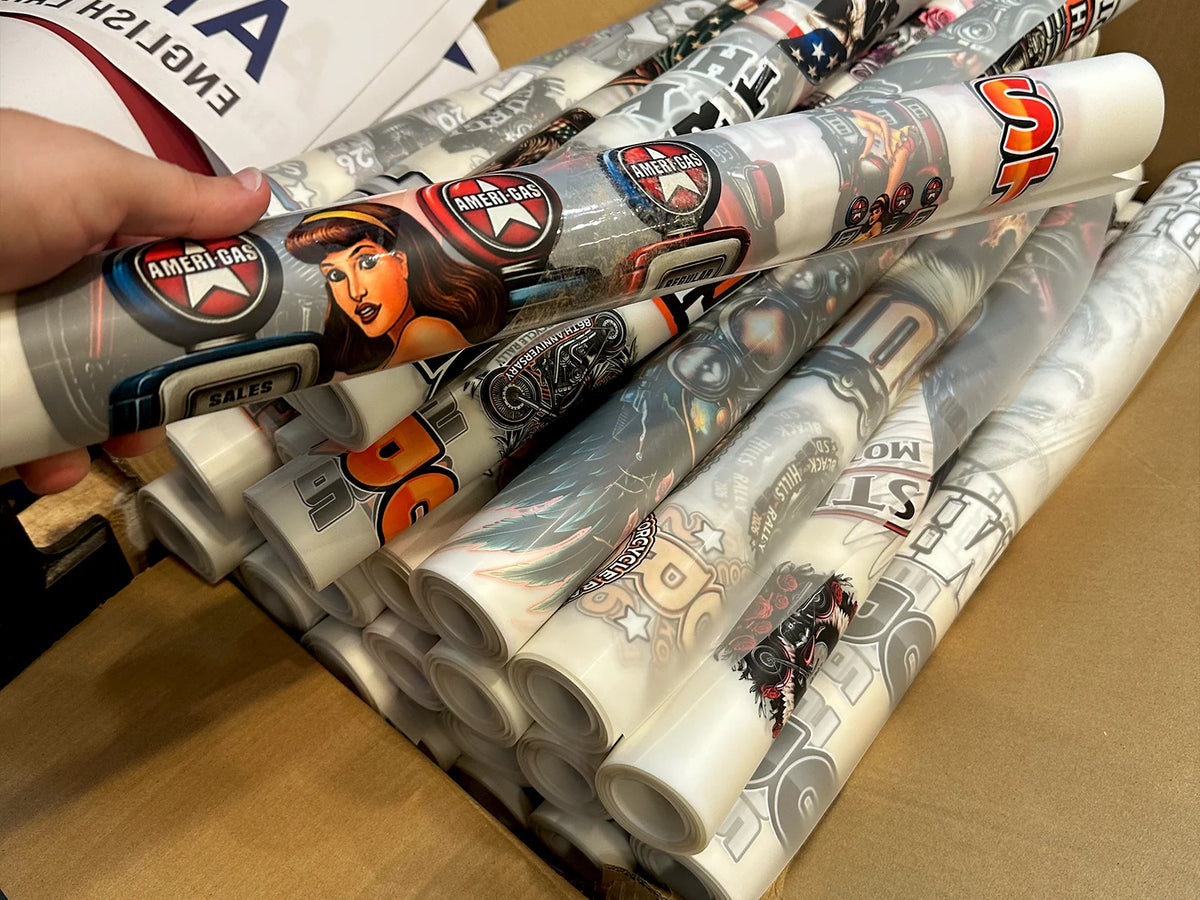
Look past outdated assumptions
Modern DTF can deliver vibrant color, fine detail, flexible wear, and repeatable production across many common apparel fabrics.
The method is not automatically premium or poor. Materials, production control, artwork, pressing, garment choice, and care determine the finished result.
Modern DTF handles color and detail well
DTF is useful for artwork that would be cumbersome to separate into multiple screen-printing colors. A well-produced transfer can reproduce rich color, gradients, small text, fine lines, and detailed multicolor artwork in one design.
Full-color artwork
Detailed graphics and gradients do not require one physical screen for every color.
Repeatable output
Digital source artwork makes it easier to reproduce the same design across restocks and multiple sizes.
Clean detail
Sharp source files and controlled production help preserve fine lines, edges, and small lettering.
That does not remove the need for good artwork. Tiny details, unintended backgrounds, low-resolution files, and incorrect final dimensions can still create a poor result.
High-quality DTF can be flexible and wearable
Low-quality transfers or overly large solid print areas can feel stiff. A properly produced and applied transfer should move with the garment during normal wear and stay securely bonded without feeling unnecessarily heavy.
Pressing matters too. Using settings that do not match the supplied instructions can change adhesion, surface finish, and flexibility. Review the DTF pressing guide before troubleshooting the transfer itself.
DTF works across many common apparel fabrics
DTF is often selected because it can decorate cotton, polyester, blends, and other common garments without requiring a completely different artwork workflow for each fabric.
- Confirm the garment tolerates the required application process
- Test unfamiliar or performance-treated fabrics before production
- Account for seams, zippers, pockets, and uneven platen contact
- Use the transfer instructions supplied for the exact product
Versatility does not mean every blank behaves identically. Fabric treatment, stretch, texture, dye, and heat sensitivity can affect the application.
DTF supports small runs and faster product testing
Screen printing can be efficient for long runs of simple artwork, but its setup is harder to justify for every small or highly varied order. DTF helps brands and print shops handle work such as:
Limited drops
Test a design without committing to a large finished-garment inventory.
Full-color custom work
Accept detailed artwork without building a separate screen for each color.
Restocks and variations
Reorder proven designs or combine several artworks in one production workflow.
This flexibility can help a new brand learn what sells and can help a print shop accept jobs that do not fit a traditional long-run workflow.
The real dividing line is production quality
Many negative DTF experiences can be traced to weak materials, inconsistent powder coverage, incorrect curing, poor artwork preparation, or pressing mistakes. That does not make every failure the customer's fault, and it does not make every DTF transfer equal.
- Color remains accurate and consistent across the order
- Fine details and edges reproduce cleanly
- The transfer presses according to the supplied instructions
- The finished print stays flexible during normal wear
- Repeat orders produce dependable results
- Durability expectations are clearly qualified by application and care
Use the full high-quality DTF transfer checklist when evaluating a supplier or reviewing a sample.
When modern DTF is a strong fit
DTF is especially practical for full-color artwork, multiple fabric types, small and medium runs, fast product tests, detailed logos, and businesses that want to press finished garments as orders develop.
It is not automatically the best method for every job. Large runs of simple spot-color artwork may favor screen printing, while other substrates can require sublimation or UV DTF. Compare methods by the blank, artwork, quantity, finish, and workflow rather than choosing from reputation alone.
Choose a DTF path that fits your production
Build a custom sheet, upload a completed layout, or order transfers already separated for pressing.


