
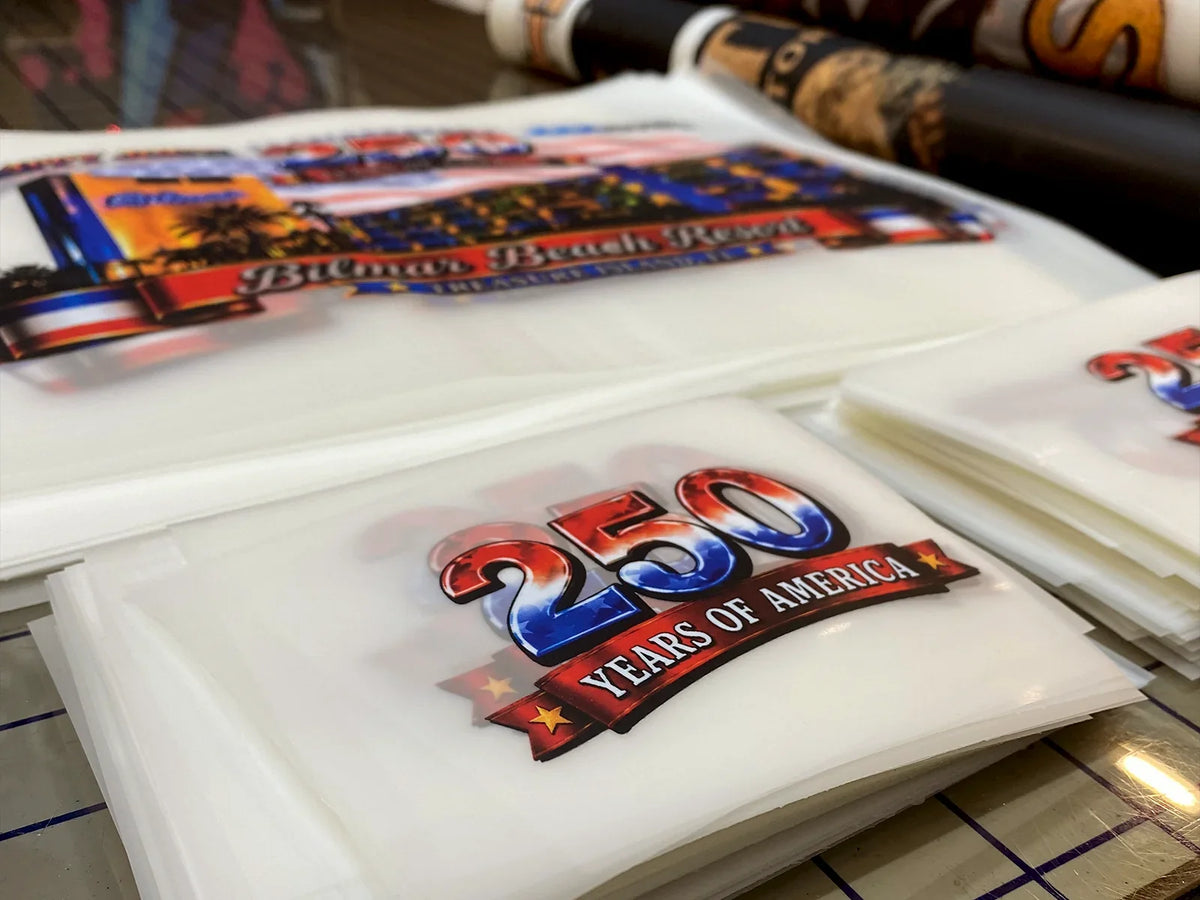
Evaluate the finished result and the process behind it
A high-quality DTF transfer should reproduce clean color and detail, press predictably, move with the garment, and remain consistent across repeat orders.
No single test proves quality. Review the artwork, transfer, application, finished garment, wash performance, and supplier consistency together.
1. Vibrant, accurate color
Full-color capability is only useful when the output is clean and repeatable. Look for intentional blacks, saturated colors, smooth gradients, and neutral areas that do not carry unwanted color.
- Colors appear intentional rather than dull or muddy
- Gradients transition smoothly
- White underbase does not show where it should be hidden
- Repeated copies on the order look consistent
Color can vary between screens, artwork color spaces, printers, inks, and garments. Approve a physical sample when a precise brand color is critical.
2. Clean edges and usable fine detail
Fine lines, small lettering, outlines, and negative spaces should reproduce cleanly at the intended print size. Inspect the transfer and the pressed garment rather than judging only the source file.
3. Predictable adhesion without guesswork
A ready-to-press transfer should bond when the correct equipment and supplied instructions are used. It should not require random heat, pressure, or repeated press cycles just to keep normal edges down.
Clean peel
The film releases according to its specified hot, warm, or cool peel behavior.
Secure edges
Fine details and perimeter areas remain bonded after the complete application sequence.
Repeatable process
The same documented setup produces consistent results across the order.
If application is inconsistent, use the pressing troubleshooting guide before deciding whether the transfer or the process is responsible.
4. Flexibility during normal wear
A well-made transfer should move with a compatible garment without immediately splitting, lifting, or cracking. The artwork coverage, garment stretch, materials, curing, and pressing process all influence flexibility.
Stretch testing should be reasonable for the garment and placement. Pulling a design far beyond normal wear is not a useful durability standard.
5. A finish appropriate for the artwork
DTF has a surface feel, but premium production should avoid unnecessary bulk or stiffness. Large solid artwork naturally covers more fabric than an open design with negative space, so compare similar designs when judging feel.
- The surface feels smooth and securely bonded
- The design moves appropriately with the garment
- The finish matches the approved sample
- The garment remains comfortable for its intended use
6. Controlled film, powder, printing, and curing
Quality is built before the transfer reaches the heat press. Film compatibility, ink laydown, adhesive coverage, curing, handling, and inspection all affect adhesion, detail, flexibility, and longevity.
Even adhesive coverage
Powder belongs where the printed design needs it without obvious contamination around the artwork.
Complete curing
The transfer arrives ready for the application process rather than under-cured or damaged by uncontrolled heat.
Production inspection
Obvious print defects, debris, missing details, and damaged film are caught before fulfillment.
7. Consistency from order to order
Brands and print shops need repeatable output, not one impressive sample. Compare color, dimensions, edge quality, adhesion, film behavior, and turnaround across repeat orders.
| Evidence | What to look for | Why it matters |
|---|---|---|
| Pressed sample | Color, detail, feel, edges, and garment compatibility | Shows the complete transfer-and-application result |
| Clear instructions | Specific application and peel guidance for the product | Supports repeatable production and useful troubleshooting |
| Wash test | Performance after correct application and care | Tests more than the first impression at the press |
| Repeat order | Comparable color, dimensions, and film behavior | Protects production consistency and brand reputation |
| Support process | A clear way to document and review a production issue | Helps resolve genuine defects without guesswork |
Why transfer quality matters to a business
The transfer affects customer satisfaction, production time, rework, reviews, repeat purchases, and confidence in the finished garment. Saving on the transfer is not a savings when inconsistent output creates damaged blanks or customer replacements.
For broader context on outdated assumptions, read why modern DTF is better than many people expect.
Choose the transfer format that fits your quality process
Start with production-ready artwork, approve a pressed sample, and document the successful application before scaling.


